
2026 SAPA Science and Career Symposium Successfully Held at Rutgers University


On May 2, 2026, the Sino-American Pharmaceutical Professionals Association (SAPA) successfully hosted the 2026 SAPA Science and Career Symposium at Rutgers Robert Wood Johnson Medical School. Under the theme “Accelerating Innovation, Reshaping Careers,” the symposium brought together distinguished scientists and thought leaders from pharmaceutical R&D, biotechnology, healthcare, academia, and artificial intelligence to share insights into transformative technologies and provide career guidance. The event attracted hundreds of attendees, offered more than 500 on-site job opportunities, and featured multiple parallel sessions, AI workshops, and career development forums, demonstrating SAPA’s strong commitment to advancing innovation and empowering life science professionals at every career stage.

The symposium officially opened in the morning with welcome remarks from Wei Ding (PhD, President, SAPA; Head of Bioinformatics and Data Science, Alexion AstraZeneca), who encouraged participants to engage in SAPA’s upcoming activities and continue expanding their academic and professional horizons.

Following the opening remarks, Symposium Chair Brian Jiang (PhD, Senior Manager of Digital R&D Creation Center, Pfizer) introduced the rich and diverse agenda of this year’s SCS and highlighted the symposium’s focus on scientific innovation, AI transformation, and career development. Representing the sponsor for this event, Blair Bu (Global Senior Partner, Healthcare & Life Sciences, IntelliPro Group) shared how IntelliPro Group has dedicated itself to providing precision talent search and recruitment solutions across multiple industries. Over the past decade, the company has helped numerous biotech firms build core executive teams, completing approximately $1 billion in executive recruitment projects across China, the United States, Europe, and Japan. Reflecting on recent market trends, she noted that despite last year’s challenges, 2026 has already shown clear signs of recovery, encouraging attendees to seize emerging opportunities and proactively expand their professional networks.
Morning Plenary Session
The morning plenary session began with Gang Chen (PhD, Senior Vice President, Protein Expression Sciences, Regeneron Pharmaceuticals), who delivered the keynote presentation “Innovating Technologies to Accelerate Discovery.” He highlighted Regeneron’s three major technology platforms—Velocigene, Velocimouse, and Velocimab—which have significantly accelerated antibody and drug development. In addition, he introduced Regeneron’s cell line development paradigm, which enables high-yield antibody production through EESYR and NICE/FASTER technologies, underscoring the critical role of platform innovation in pharmaceutical manufacturing. He concluded with career advice emphasizing the importance of efficient data generation, taking risks on high-impact projects, and making meaningful contributions.

Building on the discussion of technological innovation, Fei Wang (PhD, Frances and John L. Loeb Professor of Medical Informatics; Associate Dean of Artificial Intelligence & Data Science, Weill Cornell Medicine, Cornell University) presented “Harnessing Artificial Intelligence in Pharmaceutical Research and Development,” focusing on AI applications in pharmaceuticals and clinical medicine. He explained that the pharmaceutical industry faces mounting efficiency challenges driven by “Eroom’s Law,” and argued that AI—particularly multi-agent systems—could help reverse this trend. Drawing on case studies in target discovery, pathology analysis, and clinical data modeling, he described how fragmented adoption of multiple AI vendors can create a “Frankenstein problem” across systems and workflows. To address this challenge, he proposed a central orchestrator architecture to unify coordination and feedback across different stages. He concluded by emphasizing that 2026 represents a pivotal year for multi-agent systems, with effective control and coordination emerging as a major challenge moving forward.

The session then shifted toward precision medicine, where Peter Schafer (PhD, Chair, Prognostic Lung Fibrosis Consortium (PROLIFIC)) delivered “Pulmonary Fibrosis Foundation: Precision Medicine: Moving from Discovery to Implementation.” Drawing from extensive clinical experience, he used Vectibix, Belimumab, and Fostamatinib as examples to illustrate the biomarker-driven precision medicine paradigm. This approach uses measurable indicators to identify patient populations most likely to benefit from treatment, thereby improving clinical success rates and directing drug development toward diseases and patients with the greatest unmet clinical needs.
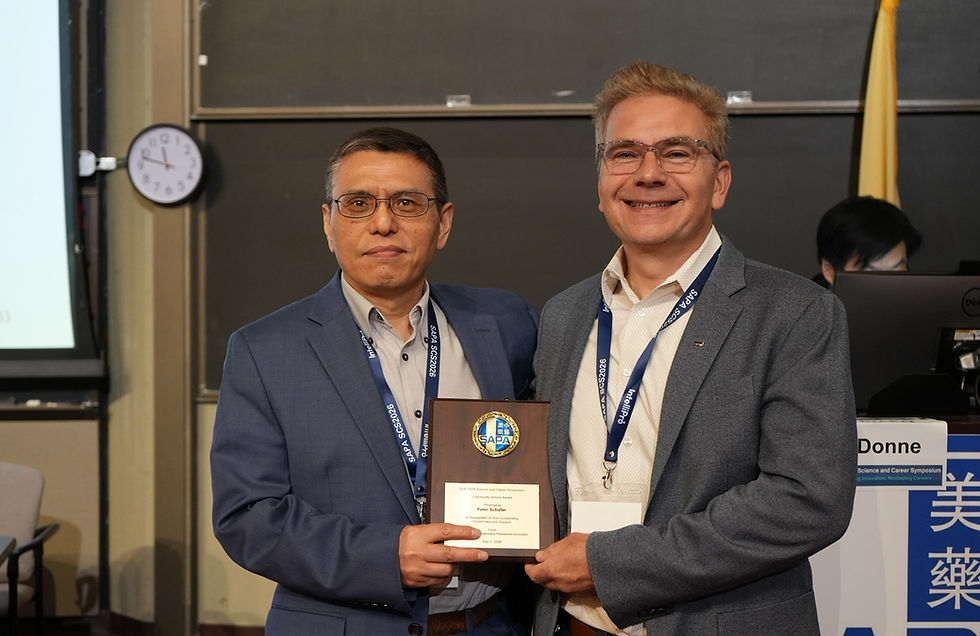
Closing the plenary session, David Donne (PhD, Vice President & Group Head, Oncology Regulatory Affairs III, Bayer) presented “New Paradigms in Drug Discovery and Development: Regulatory Strategy Insights in Precision Oncology.” He described three key dimensions for translating precision oncology into actionable clinical benefit: “Killing,” which addresses how tumor cells are eliminated through drug mechanisms; “Targeting / patient selection,” which determines where the drug acts and which patients benefit through biomarker-based selection; and “Susceptibility,” which evaluates whether effective tumor killing translates into meaningful clinical outcomes such as survival benefit. He emphasized that successful clinical outcomes depend on alignment among the patient, the drug, and the tumor context.

Lunch & Learn Session
The Lunch & Learn session opened with Han Zhu (Senior AI IT Specialist, Frontage Laboratories), who provided an overview of AI applications in imaging and CRO (Contract Research Organization) environments. He emphasized how opAIda addresses one of the most critical challenges in AI-driven CRO workflows—trustworthiness—through a human-in-the-loop design that improves reliability, interpretability, and real-world usability.
Following the opening presentation, Shreyash Singh (Senior AI Engineer, opAIda Inc.) delivered a live demonstration of the opAIda platform. Through two representative case studies, he showcased the platform’s ability to safeguard data security while significantly improving operational efficiency in CRO settings.

Expanding the discussion beyond technology development, the panel discussion featured Sho Islam (Director, Office of Business Engagement, Middlesex County, NJ) discussed the role of public-private partnerships in fostering biotech innovation, workforce development, and regional economic growth. From the investment perspective, Rene Baston (Venture Partner, Covenant Venture Capital) then shared insights into funding trends, scalability, and commercialization readiness for emerging AI-healthcare startups.
The session continued with perspectives from the CRO and startup sectors. Xiaonan Tang (SVP, Bioanalytical Services, Frontage Laboratories Inc.) outlined how AI tools are enhancing productivity, quality, and client delivery models across CRO operations. Looking ahead, Tianhao Wu (Founder & CEO, opAIda Inc.) presented a vision for AI-native pharmaceutical organizations in which intelligent systems are integrated across research, development, and operations. Continuing the discussion on enterprise AI adoption, Yingchao Zhang (Co-Founder & COO, opAIda Inc.) explored strategies for scaling AI solutions within highly regulated pharmaceutical environments. The session concluded with Zhenni Jackson (Co-Founder & CMO, opAIda Inc.), who shared insights into commercialization strategies, market education, and customer adoption for next-generation AI solutions.

Afternoon Parallel Session I: Novel Drug Discovery Science
This session showcased breakthroughs spanning oncology, immunotherapy, neuroscience, medicinal chemistry, and translational medicine.
Opening the scientific presentations, Yuhua Huang (PhD, Principal Scientist, External Discovery Chemistry, Merck & Co.) presented the well-known PCSK9 discovery case study, demonstrating how mRNA display and structure-guided medicinal chemistry enabled the design of passively permeable macrocyclic peptides. Her presentation focused on the challenges of developing orally available PCSK9 cyclic peptides and the iterative strategies used to optimize binding affinity, permeability, metabolic stability, and bioavailability.

The session then moved into next-generation cell therapy approaches, with Dongfang Liu (MD, PhD, Professor, Pathology, Immunology, and Laboratory Medicine, Rutgers University) discussing advances in CAR-NK cell therapy for hepatocellular carcinoma (HCC). He highlighted the off-the-shelf potential of CAR-NK cells and demonstrated how NK expansion platforms can generate sufficient CD147-CAR-NK cells from peripheral or cord blood mononuclear cells while evaluating efficacy and toxicity in HCC treatment.

Continuing the immunotherapy theme, Binfeng Lu (PhD, Professor, Hackensack Meridian School of Medicine) shared his work on cytokine-based cancer immunotherapy centered on IL-33/IL-36-driven immune activation. He highlighted several engineering and delivery strategies, including local vvTD-IL36 delivery, tumor-targeted LNP-IL36, engineered IL-33 fusion proteins, and rational combinations with immune checkpoint inhibitors for metastatic cancer treatment.

Shifting toward cancer epigenetics, Liling Wan (PhD, Assistant Professor, University of Pennsylvania) presented research on chromatin-associated mechanisms that drive aberrant transcriptional programs and therapeutic vulnerabilities. Her work explored ENL/AF9-related chromatin reader biology, oncogenic transcriptional condensates, and emerging epigenetic targets that may create new opportunities for precision oncology.

The conversation then expanded into AI-enabled oncology development, where Jianda Yuan (MD, PhD, Clinical Director, Merck & Co.) discussed the application of artificial intelligence across discovery, early development, and late-stage clinical programs. He emphasized that while AI remains largely investigational, it may deliver near-term value by accelerating discovery cycles, improving survival prediction in small cohorts, and supporting evidence-driven, interpretable, and regulatory-aligned clinical development.

Next, Xingxing Zang (PhD, Professor & Institute Director, Albert Einstein College of Medicine) reviewed newly discovered immune checkpoint pathways and their translation from fundamental immunology discoveries into novel therapeutics and clinical trials. His presentation highlighted the HHLA2/TMIGD2/KIR3DL3 axis within the B7 family as a distinct human immune regulatory pathway with strong potential for first-in-class immunotherapy development.

Closing the session, Huaye Zhang (PhD, Associate Professor, Neuroscience and Cell Biology, Rutgers University) presented research on MARK2 in neuron-glia interactions, highlighting its role in autism-related cognitive and social functions as well as brain injury responses. Her work demonstrated that loss of MARK2 disrupts synaptic transmission, ion homeostasis, and microglial regulation, while MARK kinase activation by metformin may improve outcomes following traumatic brain injury.

Afternoon Parallel Session II: Career Development
The Career Development session is led by Jianjian Guo (PhD,Associate, McKinsey) and Xiaowei Sun (PhD, Senior Scientist, Bristol Myers Squibb). The session opened with Sara Gao (EdD, MSc, Director, Wharton Executive Education), who delivered “Curiosity as Career Strategy: How Scientists Become Influential Leaders in the Age of AI.” She emphasized that scientific thinkers can transform their strengths into leadership impact by treating strategy as hypotheses, seeking disconfirming perspectives, and surrounding themselves with people who challenge and expand their thinking. She noted that effective leadership is rooted in curiosity—the ability to ask the right questions, shift judgment into understanding, and create psychological safety by exploring others’ perspectives rather than assuming intent. She also highlighted how curiosity signals ownership and maturity, strengthens trust when leading without authority, and helps leaders motivate and develop talent by remaining mindful of emotional contagion and team dynamics.

Following the keynote talk, the panel discussion “Landing the Job: Early-Career Biopharma Success from Recent Hires” brought together Blair Bu (Global Senior Partner, Healthcare&Life Science, IntelliPro Group), Qi Song (PhD, Principal Scientist, Predictive Biology and AI, Bristol Myers Squibb), Yuan Wang (PharmD, Global Medical Affairs Scientific Communication Director, Sanofi), and Chunyu Wu (PhD, Senior Scientist, Protein Engineering and Biocatalysis, Merck & Co.). Across the discussion, the panelists emphasized that while strong technical skills are essential, long-term growth also depends on leadership, communication, networking, and adaptability—particularly as AI becomes increasingly central to scientific and medical functions. They encouraged candidates to understand their strengths, prepare deeply for interviews, build authentic relationships, embrace AI tools, and develop a genuine personal brand over time.

The session then transitioned into the mock interview workshop, “Beyond the Resume: Crafting Impactful Narratives for Interviews,” moderated by Jianjian Guo featuring Xiaomai Zhang (Chief Marketing Officer & Brand Strategy Leader, Hope AI), Qingcong Lin (President, Medicilon), Zifan Gong (Principal Scientist, Global Product Development, Bristol Myers Squibb), and Qi Song. Through practical examples, the workshop demonstrated that while strong technical skills are essential, top candidates distinguish themselves through clear storytelling, effective communication of their personal contributions, and the ability to translate statistical or machine learning results into language that clinicians and biologists can easily understand. Speakers consistently emphasized interpretability, biological relevance, and validation, noting that AI can accelerate routine work but cannot replace scientific reasoning or cross-functional communication.

Closing the Career Development track, the “Career Roundtables & Networking with Industry Professionals” session featured Jaclyn Lee (MS, GPHR, SHRM-SCP, Business Strategist; Co-Founder & President, iHub), Will Ma (PhD, Senior Statistician; Founder & CEO, Hope AI), Robin Huang (PhD, Associate Director & Cell and Molecular Biologist, iPhase Biosciences), and Xianmu Li (Yale Student Association). Through interactive small-group discussions, attendees gained practical career insights, explored non-academic career pathways, and received personalized guidance on professional development and networking opportunities across biotechnology, artificial intelligence, business strategy, and student leadership.

Afternoon Parallel Session III: Pharma AI and Data Science
The session opened with a series of AI-generated videos that set the tone for a forward-looking discussion on the role of artificial intelligence in biomedical research and healthcare innovation. Session chairs Jason Zhong and Xi Cheng welcomed attendees and introduced the speakers.
Opening the program, Mengdi Wang (PhD, Professor of Electrical Engineering & Computer Science and the Center for Statistics and Machine Learning, Princeton University) presented a vision of AI as a “co-scientist,” highlighting Princeton’s “AI for Accelerated Invention” initiatives aimed at integrating AI agents into scientific discovery workflows. She showcased projects spanning AI-assisted hypothesis generation, autonomous experimentation, and biomedical foundation models, emphasizing the transition of AI from a passive analytical tool to an active collaborator in research. Among the featured examples was LAB-OX (LabOS), an AI-XR platform that connects multimodal AI agents with real-world laboratory environments to support applications such as cancer immunotherapy discovery, stem-cell engineering, and autonomous biomolecular experimentation. Wang also highlighted collaborative efforts in AI-assisted gene editing, demonstrating how agentic AI systems can automate and accelerate complex biomedical research workflows.

Building on the concept of AI-driven scientific collaboration, Kexin Huang (Co-Founder & CEO, Phylo) introduced Biomni, a general-purpose biomedical AI agent developed within the broader “AI for Accelerated Invention” ecosystem through collaborations across Stanford, Princeton, and affiliated research communities. Huang described Biomni as a platform that combines large language model reasoning, retrieval-augmented planning, and code-based execution to automate complex biomedical research tasks. He also introduced the Integrated Biology Environment (IBE), a collaborative workspace that unifies biomedical tools, databases, and scientific software into a single environment where AI agents and researchers can interact with full traceability. Through multiple use cases, Huang demonstrated how Biomni and IBE can improve efficiency and reproducibility while preserving scientific rigor, transparency, and human oversight.

Continuing the focus on AI in clinical and translational research, Yifan Peng (PhD, FACMI, Associate Professor, Department of Population Health Sciences, Weill Cornell Medicine, Cornell University) presented recent advances in biomedical natural language processing and evidence extraction for evidence-based medicine (EBM). Addressing the growing challenge of navigating rapidly expanding medical literature, Peng highlighted AI frameworks that use structured PICO (Patient, Intervention, Comparison, Outcome) representations to improve the transparency and traceability of evidence synthesis. He demonstrated semi-supervised and large language model-assisted approaches for evidence extraction under limited annotated data conditions, as well as neural-symbolic AI methods for biomedical concept normalization. Peng also discussed fine-tuning open-source large language models for medical evidence summarization and retrieval-augmented generation, with a focus on improving long-context reasoning, reducing retrieval failures, and maintaining interpretability and clinical reliability.

The discussion then shifted toward real-world evidence and enterprise healthcare applications, with Ying Li (Director, Regeneron Pharmaceuticals) presenting on advanced analytics and AI-enabled evidence generation. She emphasized that the major bottleneck in translating therapies to patients lies not in drug discovery itself, but in the generation, validation, and operationalization of clinical evidence. Her presentation illustrated how machine learning and generative AI can accelerate evidence generation throughout the drug development lifecycle, including patient cohort identification, outcome analysis, protocol optimization, and large-scale literature synthesis. At the same time, she stressed the importance of human-in-the-loop oversight due to regulatory and clinical risks, emphasizing trust, interpretability, and accountability as essential factors for adoption.

Next, Qiaohui Zhou (PhD, Senior Scientist, Generative AI Biostatistics, Merck & Co.) shared examples of internal generative AI tools designed to support clinical research, analytics automation, and scientific productivity. She discussed how AI coding agents are transforming biostatistics and biometrics workflows by automating routine coding and analytical tasks. Rather than building custom AI infrastructure from scratch, Zhou encouraged organizations to leverage rapidly evolving existing agent platforms. Her presentation highlighted how standardized statistical workflows can be encoded into reusable AI “skills,” while underscoring that human experts remain responsible for validation, interpretation, and regulatory compliance.

The session concluded with a panel discussion moderated by Yunlong Wang (PhD, MBA, Director & AI Scientist, IQVIA), featuring all five speakers. Panelists reflected on recent achievements, future opportunities, and practical challenges in deploying AI within biomedical and healthcare settings. While the speakers expressed optimism about the transformative potential of AI, they agreed that the field’s most pressing challenges now center on scalability, benchmarking, trust, and stakeholder adoption rather than on core algorithmic development itself.

Afternoon Parallel Session IV: Agentic AI Workshop
Vibe, Build, Present: AI Agents for Pharma in a Day
This hands-on workshop combined technical learning with rapid prototyping, giving participants the opportunity to build practical AI agents for pharmaceutical use cases.
Led by Junchi Lu (PhD, Associate Director, Bristol Myers Squibb) and Zhiwei Yin (PhD, Associate Director, Bristol Myers Squibb), the workshop opened with introductions to multi-agent architectures, workflow automation, supply chain copilots, and development frameworks such as LangChain and LangGraph. Zhiwei Yin demonstrated how coordinated multi-agent systems can address complex clinical safety data challenges, while Junchi Lu expanded into business applications, illustrating how multi-agent workflows can support deal sourcing, evaluation, and strategic decision-making.


The session quickly transitioned into an interactive build phase, where participants were divided into six teams supported by teaching assistants for troubleshooting and brainstorming. Within a short period of time, teams progressed from concept to implementation, developing AI-driven solutions tailored to real-world pharmaceutical challenges.
The final presentations showcased a wide range of applications, including clinical trial safety analyzers, BD deal intelligence tools, AI-driven deal pricing and comparison systems, competitive landscape analysis platforms, deal evaluation frameworks, and persona identification tools for targeted sales outreach. Each team demonstrated strong technical creativity and clear relevance to pharmaceutical applications.
Following the presentations, judges selected the Deal Evaluation team as the winner, with each team member receiving a SAPA wine award in recognition of their work.
Overall, the workshop demonstrated how rapidly agentic AI can move from concept to practical application when combined with domain expertise and collaborative problem-solving.

Afternoon Parallel Session V: Opportunities & Challenges for Tech Startups in the New Era of AI
This roundtable forum opened with keynote-style discussions from invited speakers. Mei Yang (Co-Founder & CEO, NouStarX) and Yanfei Gao (PhD, Founder & CEO, SKY Pharmaceutical Development) reflected on their transitions from pharmaceutical industry professionals to startup founders. Drawing from personal experience, they analyzed both the opportunities and challenges of entrepreneurship in the AI era. Their discussion focused on whether startups should leverage social media to expand visibility, how early-stage companies can acquire clients, and how AI integration is fundamentally reshaping operational models.
Continuing the entrepreneurship discussion, serial entrepreneurs Yingchao Zhang (Co-Founder & COO, opAIda Inc.) and Tianhao Wu (Founder & CEO, opAIda Inc.) shared their long-term journey in AI innovation, beginning in 2018 and culminating in the founding of opAIda in 2025. They discussed their motivations for continuous innovation and highlighted the strengths of opAIda’s products, particularly in open-source compatibility, security, and ease of deployment.
The roundtable discussion was then moderated by Xiaobin Huang (PhD, Founder & President, Global Technology Roundtable Alliance (GTRA)), who raised a series of questions on behalf of early-career professionals considering entrepreneurship. Topics included the advantages and disadvantages of beginning a career in large companies, small companies, or startups; the unique challenges of entrepreneurship in the AI era; strategies for competing and collaborating with large corporations; approaches to securing angel investment and managing cash flow; and how individuals can determine whether they are better suited for entrepreneurial or more traditional career paths.
These questions sparked a lively and engaging discussion among both invited speakers and audience participants, many of whom contributed perspectives drawn from their own entrepreneurial experiences.

Closing Remarks
The 2026 SAPA Science and Career Symposium successfully demonstrated how scientific excellence, career development, and artificial intelligence are converging to shape the future of healthcare. SAPA extends sincere appreciation to all speakers, sponsors, volunteers, and attendees whose support made this flagship event another tremendous success.


Comments